Posts

Showing posts with the label African Heritage Sites

The Heritage City of Meknes Morocco

Image
The Heritage City of Meknes has exerted a considerable influence on the development of the civil and military architecture and works of art. The name of Meknes goes back to the Meknassa, the great Berber tribe that dominated eastern Morocco to as far as the Tafililet and which produced Moulay ldriss I, founder of the Moroccan state and the ldrissid dynasty in the 8th century AD. Continent: Africa Country: Morocco Category: Cultural Criterion: (IV) Date of Inscription: 1996

Ruins of Loropeni Burkina

Image
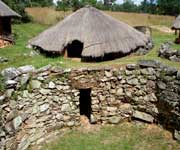
The recent inter-disciplinary project has allowed a reassessment of the history of Loropeni. This has pushed much further back the date of its construction from around the 17th century to at least the 11th century AD and disassociated it from the Gan people, mentioned in the previous evaluation report. Indeed in spite of the many writings on these ruins since the beginning of the 20th century, no serious archaeological investigations have been undertaken to support information from oral traditions and the other documentary sources. The recent targeted excavations were to thus able to start to bridge this gap. Continent: Africa Country: Burkina Category: Cultural Criterion: (III) Date of Inscription: 2009

Koutammakou the Land of the Batammariba Togo

Image
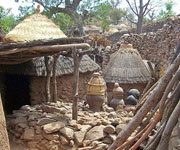
The Koutammakou, a cultural landscape in north-eastern Togo extending into neighbouring Benin, is home to the Batammariba people whose remarkable Takienta mud tower-houses have come to be seen as a symbol of Togo. They are also a reflection of social structure and are known to blend uniquely with the natural environment of farmland and forest. Many of the buildings are two storeys high and those with granaries feature an almost spherical form above a cylindrical base. Some of the buildings have flat roofs, others have conical thatched roofs. They are grouped in villages, which also include ceremonial spaces, springs, rocks and sites reserved for initiation ceremonies. Continent: Africa Country: Togo Category: Cultural Criterion: (V)(VI) Date of Inscription: 2004

Medina of Sousse Tunisia

Image
Medina of Sousse bears exceptional witness to the civilization of the first centuries of the Hegira. The medina constitutes an early and interesting example of a new type of Islamic city. The most ancient and best conserved of all, the ribat of Sousse is an excellent example of this type of construction. The port of Sousse was the Phoenician outpost of Hadrumetum, a free Roman city, the capital of Byzacium under Diocletian, the Vandal city of Hunericopolis, and finally the Byzantine city of Justiniana or Justinianopolis. No monument, however, survives from these thousand years of history, for during his conquest of Ifriqiya, Oqba ibn Nafìi entirely destroyed Justinianopolis after a two-month siege. Built in the late 7th century on these ruins and given its present name, Sousse was a completely new city. Continent: Africa Country: Tunisia Category: Cultural Criterion: (III)(IV) (V) Date of Inscription: 1988

Sacred Mijikenda Kaya Forests Kenya

Image
The Mijikenda Kaya Forests consist of 11 separate forest sites spread over some 200 km along the coast containing the remains of numerous fortified villages, known as kayas, of the Mijikenda people. The kayas, created as of the 16th century but abandoned by the 1940s, are now regarded as the abodes of ancestors and are revered as sacred sites and, as such, are maintained as by councils of elders. The site is inscribed as bearing unique testimony to a cultural tradition and for its direct link to a living tradition. Continent: Africa Country: Kenya Category: Cultural Criterion: (III)(V) (VI) Date of Inscription: 2008

World Heritage W National Park of Niger

Image
The part of 'W' National Park that lies in Niger is situated in a transition zone between savannah and forest lands and represents important ecosystem characteristics of the West African Woodlands/Savannah Biogeographical Province. The site reflects the interaction between natural resources and humans since Neolithic times and illustrates the evolution of biodiversity in this zone. The 'W' National Park, so named because of the local configuration of the Niger River (220,000 ha), is located in a transition zone between Sudan and Guinea savannahs and contiguous to 'W' National Parks in both Burkina Faso and Benin, and the Reserve de Faune de Tamou to the north. Shrub savannah is the most widespread vegetation type occurring on shallow infertile soils. Continent: Africa Country: India Category: Natural Criterion: (IX)(X) Date of Inscription: 1996
The cultural landscape of Sukur Nigeria

Image
The cultural landscape of Sukur has survived unchanged for many centuries, and graphically illustrates a form of land use that marks a critical stage in human settlement and its relationship with its environment. Situated on a plateau in north-eastern Nigeria, near the frontier with Cameroon, it has been occupied for centuries, and its inhabitants have left abundant traces on the present-day landscape. Continent: Africa Country: Nigeria Category: Cultural Criterion: (III)(V) (VI) Date of Inscription: 1999

Osun-Osogbo Sacred Grove Nigeria

Image
The town of Osogbo is believed to have been founded around 400 years ago. It is part of the wider Yoruba community, divided into 16 kingdoms, which legend says were ruled by the children of Oduduwa, the mythic founder, whose abode at Ile-Ife, south-east of Osogbo, is still regarded as the spiritual home of the Yoruba people. The earliest settlement seems to have been in the Osogbo Grove and included palaces and a market. When the population expanded the community moved outside the Grove and created a new town, which reflected spatially the arrangements within the Grove. Continent: Africa Country: Nigeria Category: Cultural Criterion: (II)(III) (VI) Date of Inscription: 2005

The Ancient City of Aksum Ethiopia

Image
The ruins of the ancient city of Aksum are found close to Ethiopia's northern border. They mark the location of the heart of ancient Ethiopia, when the Kingdom of Aksum was the most powerful state between the Eastern Roman Empire and Persia. The massive ruins, dating from between the 1st and the 13th century A.D., include monolithic obelisks, giant stelae, royal tombs and the ruins of ancient castles. Long after its political decline in the 10th century, Ethiopian emperors continued to be crowned in Aksum. Continent: Africa Country: Ethiopia Category: Cultural Criterion: (I)(IV) Date of Inscription: 1980 The ruins of the ancient city of Aksum The ruins of the ancient city of Aksum are located close to Ethiopia's northern border. They mark the location of the heart of ancient Ethiopia, when the Kingdom of Aksum was the most powerful state between the Eastern Roman Empire and Persia. The massive ruins, dating from between the 1st and 13th centuries, incl...

Mana Pools National Park, Sapi and Chewore Safari Areas World Heritage Site

Image
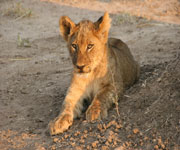
The Mana Pools National Park, Sapi and Chewore Safari Areas World Heritage Site is an area of dramatic landscape and ecological processes. Physically protected by the Zambezi River to the north and the steep escarpment (which rises to over 1,000 m from the valley floor) to the south, this substantial property of 676,600 ha provides shelter for immense congregations of Africa's large mammal populations which concentrate in its flood plains. The Mana Pools are former channels of the Zambezi River, and ongoing geological processes present a good example of erosion and deposition by a large seasonal river including a clear pattern of plant succession on its alluvial deposits. While black rhino has disappeared since the property's inscription, huge herds of elephant and buffalo, followed by zebra, waterbuck and many other antelope species and their associated predators including lion and hyena migrate to the area each year during the dry winter months. Continent: Africa Co...

World Heritage Great Zimbabwe National Monument

Image
Great Zimbabwe National Monument is approximately 30 km from Masvingo and located in the lowveld at an altitude of some 1100 m in a sparsely populated region of the Bantu/Shona people. The property, built between 1100 and 1450 AD, extends over almost 800 ha and is divided into three groups: the Hill Ruins, the Great Enclosure and the Valley Ruins. The Hill Ruins, forming a huge granite mass atop a spur facing north-east/south-west, were continuously inhabited from the 11th to 15th centuries, and there are numerous layers of traces of human settlements. Rough granite rubble-stone blocks form distinct enclosures, accessed by narrow, partly covered, passageways. This acropolis is generally considered a 'royal city'; the west enclosure is thought to have been the residence of successive chiefs and the east enclosure, where six steatite upright posts topped with birds were found, considered to serve a ritual purpose. Continent: Africa Country: Zimbabwe Category: Cultural...

Khami Ruins National Monument Zimbabwe

Image
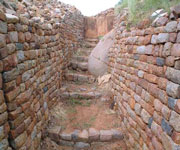
Khami Ruins National Monument is located to the west of the Khami River, 22 km from the City of Bulawayo. The property, located on a 1300 m hilltop downstream from a dam built during 1928-1929, covers an area of about 108 ha, spread over a distance of about 2 km from the Passage Ruin to the North Ruin. The property was the capital of the Torwa dynasty, which arose from the collapse of the Great Zimbabwe Kingdom between 1450 -1650 and was abandoned during the Ndebele incursions of the 19th century. It is composed of a complex series of platforms of dry-stone walled structures, emulating a later development of Stone Age culture. The chief's residence (Mambo) was located towards the north on the Hill Ruin site with its adjacent cultivation terraces. The population lived in daga huts of cobwork, surrounded by a series of granite walls. Continent: Africa Country: Zimbabwe Category: Cultural Criterion: (III)(IV) Date of Inscription: 1986

Mosi-oa-Tunya Victoria Falls

Image
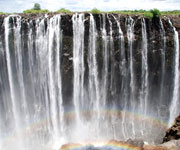
The Mosi-oa-Tunya or Victoria Falls National Park contains one of the world's most spectacular waterfalls. The falls and associated gorges are an outstanding example of river capture and the erosive forces of the water still continue to sculpture the hard basalts. The complex of conservation areas in Zimbabwe covers over 1,846,700 ha excluding forest reserves. The park abuts Dambwa Forest Reserve in Zambia. The falls are the most significant feature of the park, and when the Zambezi is in full flood (usually February or March) they form the largest curtain of falling water in the world. During these months, over 500 million litres of water per minute go over the falls, which are 1,708 m wide, and drop 99 m at Rainbow Falls in Zambia. At low water in November flow can be reduced to around 10 million litres per minute, and the river is divided into a series of braided channels that descend in many separate falls. Continent: Africa Country: Zimbabwe, Natural Category: Natu...

Matobo Hills Zimbabwe

Image
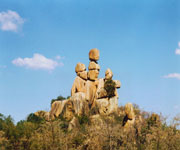
The Matobo Hills have one of the highest concentrations of rock art in Southern Africa. The rich evidence from archaeology and from the rock paintings at Matobo provide a very full picture of the lives of foraging societies in the Stone Age and the way agricultural societies came to replace them. The interaction between communities and the landscape, manifest in the rock art and also in the long-standing religious traditions still associated with the rocks, are community responses to a landscape. The Mwari religion, centred on Matobo, which may date back to the Iron Age, is the most powerful oracular tradition in southern Africa. Continent: Africa Country: Zimbabwe Category: Cultural Criterion: (III)(V) (VI) Date of Inscription: 2003

Wadi Al-Hitan Whale Valley Egypt

Image
Wadi Al-Hitan, Whale Valley, in the Western Desert of Egypt, contains invaluable fossil remains of the earliest, and now extinct, suborder of whales, Archaeoceti. These fossils represent one of the major stories of evolution: the emergence of the whale as an ocean-going mammal from a previous life as a land-based animal. This is the most important site in the world for the demonstration of this stage of evolution. It portrays vividly the form and life of these whales during their transition. The number, concentration and quality of such fossils here is unique, as is their accessibility and setting in an attractive and protected landscape. The fossils of Al-Hitan show the youngest archaeocetes, in the last stages of losing their hind limbs. Other fossil material in the site makes it possible to reconstruct the surrounding environmental and ecological conditions of the time. Continent: Africa Country: Egypt Category: natural Criterion: (VIII) Date of Inscription: 2005

Saint Catherine Area Egypt

Image
Saint Catherine Area is an Orthodox Monastery of St Catherine stands at the foot of Mount Horeb where, the Old Testament records, Moses received the Tablets of the Law. The mountain is known and revered by Muslims as Jebel Musa. The entire area is sacred to three world religions: Christianity, Islam, and Judaism. The Monastery, founded in the 6th century, is the oldest Christian monastery still in use for its initial function. Its walls and buildings of great significace to studies of Byzantine architecture and the Monastery houses outstanding collections of early Christian manuscripts and icons. The rugged mountainous landscape, containing numerous archaeological and religious sites and monuments, forms a perfect backdrop to the Monastery. Continent: Africa Country: Egypt Category: Cultural Criterion: (I) (III) (IV) (VI) Date of Inscription: 2002

Nubian Monuments from Abu Simbel to Philae Egypt

Image
Nubian Monuments from Abu Simbel to Philae is an outstanding archaeological area contains such magnificent monuments as the Temples of Ramses II at Abu Simbel and the Sanctuary of Isis at Philae, which were saved from the rising waters of the Nile thanks to the International Campaign launched by UNESCO, in 1960 to 1980. The open-air Museum of Nubia and Aswan brings together cultural properties closely associated with the unfolding of a long sequence of Egyptian Pharaonic history. In addition to the complexes of Abu Simbel and Philae the site includes the temples of Amada, of Derr, those of Ouadi Es Sebouah, Dakka and Maharraqah, the temple of Talmis, and the kiosk of ak-Kartassi, the temple of Beit el Ouali which are both rare and ancient. To these must be added the astonishing granite quarries of Aswan, exploited by pharaohs from early antiquity, where colossal unfinished obelisk-like monuments have been discovered. Continent: Africa Country: Egypt Category: Cultural Cri...

Memphis and its Necropolis Egypt

Image
Memphis and its Necropolis – the Pyramid Fields from Giza to Dahshur ;The capital of the Old Kingdom of Egypt has some extraordinary funerary monuments, including rock tombs, ornate mastabas, temples and pyramids. In ancient times, the site was considered one of the Seven Wonders of the World. The ensemble at Memphis embraces a number of exceptional monuments of great antiquity. The step pyramid of the first pharaoh of the Memphis period, constructed entirely in limestone, is the oldest known architectural structure of this type, from regularly cut stone. At Giza, one of the oldest boats preserved today, the solar barge was discovered intact in the complex around the Pyramid of Cheops. The archaic necropolis of Saqqara dates back to the period of the formation of the pharaonic civilization. The exceptional historic, artistic and sociological interest of these monuments bears witness to one of the most brilliant civilizations of this planet. Continent: Africa Country: Egypt ...

Historic Cairo Egypt

Image
Historic Cairo Tucked away amid the modern urban area of Cairo lays one of the world's oldest Islamic cities, with its famous mosques, madrasas, hammams and fountains. Founded in the 10th century, it became the new centre of the Islamic world, reaching its golden age in the 14th century. The historic centre of Cairo bears impressive material witness to the international importance, on the political, strategic, intellectual and commercial levels, of the city during the medieval period. There are few cities in the world as rich as Cairo in old buildings: the historic centre on the eastern bank of the Nile includes no less than 600 classified monuments dating from the 7th to 20th centuries, distributed over various parts of the well-preserved urban fabric, which represent forms of human settlement that go back to the middle Ages. Continent: Africa Country: Egypt Category: Cultural Criterion: (I) (IV)(VI) Date of Inscription: 1979

Cidade Velha, Historic Centre of Ribeira Grande Cape Verde

Image
Cidade Velha, Historic Centre of Ribeira Grande is a town of Ribeira Grande, renamed Cidade Velha in the late 18th century, and was the first European colonial outpost in the tropics. Located in the south of the island of Santiago, the town features some of the original street layout impressive remains including two churches, a royal fortress and Pillory Square with its ornate 16th century marble pillar. Cidade Velha, historic centre of Ribeira Grande demonstrates Outstanding Universal Value: Ribeira Grande was the first European colonial town to be built in the tropics, and marks a decisive step in European expansion at the end of the 15th century towards Africa and the Atlantic area. Continent: Africa Country: Cape Verde Category: Cultural Criterion: (II)(III) (VI) Date of Inscription: 2009