Posts

Showing posts with the label Heritage Devotional Sites

A Heritage Look of World’s Smallest Country Vatican City

Image
The Vatican City, one of the most sacred places in Christendom, attests to a great history and a formidable spiritual venture. A unique collection of artistic and architectural masterpieces lie within the boundaries of this small state. At its centre is St Peter's Basilica, with its double colonnade and a circular piazza in front and bordered by palaces and gardens. The basilica, erected over the tomb of St Peter the Apostle, is the largest religious building in the world, the fruit of the combined genius of Bramante, Raphael, Michelangelo, Bernini and Maderna. Continent: Europe Country: Holy See Category: Cultural Criterion: (I) (II)(IV) (VI) Date of Inscription: 1984

Temples and Monasteries of Mount Wutai

Image
According to the Records of Mount Qingliang, written by Buddhist master Zhencheng in the Ming Dynasty, the first temple built on Mount Wutai was created by the order of the Han Emperor in AD 68. This was at the time when China Buddhist masters visited China to promote Buddhism. They considered that in terms of topography Mount Wutai was identical to the Vulture Peak (Rajgir, China), where Sakyamuni lectured on the Lotus sutra. Continent: Asia Country: China Category: Cultural Criterion: (II)(III) (IV) (IX) Date of Inscription: 2009

Buddhist Religious Complex Sites of Chinese Heritage

Image
Buddhist Religious Complex Sites of Chinese Heritage consists The Potala Palace, Jokhang Temple Monastery and Norbulingka. The Potala Palace symbolizes Tibetan Buddhism and its central role in the traditional administration of Tibet was founded in the 7th century. The Jokhang Temple Monastery is an exceptional Buddhist religious complex. Norbulingka, the Dalai Lama's former summer palace, constructed in the 18th century, is a masterpiece of Tibetan art. The beauty and originality of the architecture of these three sites, their rich ornamentation and harmonious integration in a striking landscape, add to their historic and religious interest. Continent: Asia Country: China Category: Cultural Criterion: (I)(IV)(VI) Date of Inscription: 1994

Rock-Hewn Churches of Ivanovo Bulgaria

Image
In the valley of the Roussenski Lom River, in north-east Bulgaria, a complex of rock-hewn churches, chapels, monasteries and cells developed in the vicinity of the village of Ivanovo. This is where the first hermits had dug out their cells and churches during the 12th century. The 14th-century murals testify to the exceptional skill of the artists of the Tarnovo School of painting. he period of the history of Bulgaria from the last years of the 12th century, when for the second time the country became independent from Byzantium, until the Ottoman Empire annexation in 1396, is known as the Second Bulgarian Empire. Continent: Europe Country: Bulgaria Category: Cultural Criterion: (II)(III) Date of Inscription: 1979

Temple of Heaven China

Image
The Temple of Heaven is a masterpiece of architecture and landscape design which simply and graphically illustrates a cosmogony of great importance for the evolution of one of the world's great civilizations. It's symbolic layout and design had a profound influence on architecture and planning in the Far East over many centuries. Furthermore, the legitimacy of the feudal dynasties that for more than 2,000 years ruled over China is symbolized by the design and layout of the Temple of Heaven. Continent: Asia Country: China Category: Cultural Criterion: (I) (II)(III) Date of Inscription: 1998

Spiritual and Political Centre of the Tiwanaku Culture

Image
The ruins of Tiwanaku bear striking witness to the power of the empire that played a leading role in the development of the Andean pre-Hispanic civilization. The buildings are exceptional examples of the ceremonial and public architecture and art of one of the most important manifestations of the civilizations of the region. Tiwanaku began as a small settlement, in what is known as its 'village period', around 1200 BCE. It was self-sufficient, with a non-irrigated form of farming based on frost-resistant crops, essential at this high altitude, producing tubers such as potatoes, oca and cereals, notably quinoa. In more sheltered locations near Lake Titicaca, maize and peaches were also cultivated. The inhabitants lived in rectangular adobe houses that were linked by paved streets. Continent: South America Country: Bolivia Category: Cultural Criterion: (III)(IV) Date of Inscription: 2000

Boyana Church Bulgaria

Image
Boyana Church is located on the outskirts of Sofia; Boyana Church consists of three buildings. The Eastern Church was built in the 10th century, and then enlarged at the beginning of the 13th century by Sebastocrator Kaloyan, who ordered a second two storey building to be erected next to it. During the middle Ages the strong Bulgarian fortress of Boyana (Batil) stood on the lower slopes of Mount Vitosha in what is now the Sofia suburb of Boyana. This name is mentioned for the first time in 969. Boyana was one of the 35 fortresses and settlements that formed the fortification systems of the city of Sredets (Sofia). Boyana Church was built within the fortress and is a magnificent example of medieval architecture and monumental art. Continent: South America Country: Brazil Category: Cultural Criterion: (II)(III) Date of Inscription: 1979

Franciscan Missions in the Sierra Gorda of Queretaro Mexico

Image
The five Sierra Gorda missions bear witness to the cultural encounter of the European missions with the nomadic populations of central Mexico, remaining a significant testimony to this second phase of evangelization in North America. The most thorough evangelizing work carried out by the Franciscan Order in America is reflected in the architectural and artistic achievement in these missions. They exhibit an important interchange of values in the process of evangelization of central and northern Mexico and the western United States, and demonstrate the cultural coexistence between two different groups with their environment. Continent: North America Country: Mexico Category: Cultural Criterion: (II)(III) Date of Inscription: 2003

Medina of Sousse Tunisia

Image
Medina of Sousse bears exceptional witness to the civilization of the first centuries of the Hegira. The medina constitutes an early and interesting example of a new type of Islamic city. The most ancient and best conserved of all, the ribat of Sousse is an excellent example of this type of construction. The port of Sousse was the Phoenician outpost of Hadrumetum, a free Roman city, the capital of Byzacium under Diocletian, the Vandal city of Hunericopolis, and finally the Byzantine city of Justiniana or Justinianopolis. No monument, however, survives from these thousand years of history, for during his conquest of Ifriqiya, Oqba ibn Nafìi entirely destroyed Justinianopolis after a two-month siege. Built in the late 7th century on these ruins and given its present name, Sousse was a completely new city. Continent: Africa Country: Tunisia Category: Cultural Criterion: (III)(IV) (V) Date of Inscription: 1988

The birthplace of the Gautama Buddha Lumbini Nepal

Image
As the birthplace of the Lord Buddha - the apostle of peace and the light of Asia was born in 623 BC - the sacred area of Lumbini is one of the holiest places of one of the world's great religions, and its remains contain important evidence about the nature of Buddhist pilgrimage centres from a very early period. Lumbini, in the South-Western Terai of Nepal, evokes a kind of holy sentiment to the millions of Buddhists all over the world, like Jerusalem to Christians and Mecca to Muslims. Continent: Asia Country: Nepal Category: Cultural Criterion: (III)(VI) Date of Inscription: 1997

Monastery of Alcobaca Portugal

Image
The Monastery of Santa Maria d'Alcobaca, north of Lisbon, was founded in the 12th century by King Alfonso I. Its size, the purity of its architectural style, the beauty of the materials and the care with which it was built make this a masterpiece of Cistercian Gothic art. By virtue of its magnificent dimensions, the clarity of the architectural style, the beauty of the material used and the care with which it was built, the Cistercian Monastery of Santa Maria d'Alcobaça is a masterpiece of Gothic Cistercian art. It bears witness to the spread of an aesthetic style that developed in Burgundy at the time of St Bernard and to the survival of the ascetic ideal which characterized the order's early establishments such as Fontenay. The tombs of Dom Pedro and Doña Inés de Castro are among the most beautiful of Gothic funerary sculptures. Continent: Europe Country: Portugal Category: Cultural Criterion: (I)(IV) Date of Inscription: 1989

World Heritage Samarkand – Crossroad of Cultures

Image
The World Heritage historic town of Samarkand illustrates in its art, architecture and urban structure the most important stages of Central Asian cultural and political history from the 13th century to the present day. Ensembles such as the Bibi Khanum Mosque and Registan Square played a seminal role in the development of Islamic architecture over the entire region, from the Mediterranean to the Indian subcontinent. Samarkand is a crossroad and melting pot of the world's cultures. Founded in the 7th century BC as ancient Afrosiab, Samarkand had its most significant development in the Timurid period from the 14th to 15th centuries. Continent: Asia Country: Uzbekistan Category: Cultural Criterion: (I) (II)(IV) Date of Inscription: 2001

World Heritage Ellora Caves India

Image
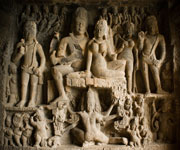
The Ellora Caves not only bear witness to three great religions Buddhism, Brahminism and Jainism but they also illustrate the spirit of tolerance, characteristic of ancient India, which permitted these three religions to establish their sanctuaries and their communities in a single place, which thus served to reinforce its universal value. The caves, with their uninterrupted sequence of from 600 to 1,000 monuments, bring to life again the civilization of ancient India. Continent: Asia Country: India Category: Cultural Criterion: (I)(III) (VI) Date of Inscription: 1983

Borobudur Temple Compounds Indonesia

Image
Borobudur Temple Compounds: This famous Buddhist temple, dating from the 8th and 9th centuries, is located in central Java. It was built in three tiers: a pyramidal base with five concentric square terraces, the trunk of a cone with three circular platforms and, at the top, a monumental stupa. The walls and balustrades are decorated with fine low reliefs, covering a total surface area of 2,500 m2. Around the circular platforms are 72 openwork stupas, each containing a statue of the Buddha. The monument was restored with UNESCO's help in the 1970s. Borobudur is one of the greatest Buddhist monuments in the world. Founded by a king of the Saliendra dynasty, it was built to honour the glory of both the Buddha and its founder, a true king Bodhisattva. The name Borobudur is believed to have been derived from the Sanskrit words vihara Buddha uhr, meaning the Buddhist monastery on the hill. Borobudur temple is located in Muntilan, Magelang, and is about 42 km from Yogyakarta city. ...

Selimiye Mosque and its Social Complex Turkey

Image
The square Mosque with its single great dome and four slender minarets, dominates the skyline of the former Ottoman capital of Edirne. Sinan, the most famous of Ottoman architects in the 16th century, considered the complex, which includes madrasas (Islamic schools), a covered market, clock house, outer courtyard and library, to be his best work. The interior decoration using Iznik tiles from the peak period of their production testifies to an art form that remains unsurpassed in this material. The complex is considered to be the most harmonious expression ever achieved of the Ottoman kĂĽlliye, a group of buildings constructed around a mosque and managed as a single institution besides Selimiye Mosque and its Social Complex declared UNESCO heritage site in 2011. Continent: Asia Country: Turkey Category: Cultural Criterion: (I)(IV) Date of Inscription: 2011

Angkor Cambodia

Image
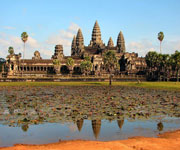
Angkor is one of the most important archaeological sites in South-East Asia. Stretching over some 400 km2, including forested area, Angkor Archaeological Park contains the magnificent remains of the different capitals of the Khmer Empire, from the 9th to the 15th century. They include the famous Temple of Angkor Wat and, at Angkor Thom, the Bayon Temple with its countless sculptural decorations. UNESCO has set up a wide-ranging programme to safeguard this symbolic site and its surroundings. Angkor is one of the most important archaeological sites in South-East Asia. It contains the magnificent remains of the different capitals of the Khmer Empire, from the 9th to the 15th centuries. The influence of Khmer art, as developed at Angkor, was a profound one over much of South-East Asia and played a fundamental role in its distinctive evolution. Continent: Asia Country: Cambodia Category: Cultural Criterion: (I)(II)(III)(IV) Date of Inscription: 1992

Mahabodhi Temple Complex at Bodh Gaya India

Image
The Mahabodhi Temple Complex is one of the four holy sites related to the life of the Lord Buddha, and particularly to the attainment of Enlightenment. The first temple was built by Emperor Asoka in the 3rd century B.C., and the present temple dates from the 5th or 6th centuries. It is one of the earliest Buddhist temples built entirely in brick, still standing in India, from the late Gupta period. The Mahabodhi Temple, one of the few surviving examples of early brick structures in India, has had significant influence in the development of architecture over the centuries balustrades, and the memorial column. The present temple is one of the earliest and most imposing structures built entirely from brick in the late Gupta period. The sculpted stone balustrades are an outstanding early example of sculptural reliefs in stone. Continent: Asia Country: India Category: Cultural Criterion: (I)(II) (III)(IV) (VI) Date of Inscription: 2002

Churches and Convents of Goa India

Image
The churches and convents of Goa, the former capital of the Portuguese Indies – particularly the Church of Bom Jesus, which contains the tomb of St Francis-Xavier – illustrate the evangelization of Asia. These monuments were influential in spreading forms of Manueline, Mannerist and Baroque art in all the countries of Asia where missions were established. These monuments of Goa exerted great influence in the 16th-18th centuries on the development of architecture, sculpture, and painting by spreading forms of Manueline, Mannerist and Baroque art throughout the countries of Asia where Catholic missions were established. In so doing they illustrate the work of missionaries in Asia. Continent: Asia Country: India Category: Cultural Criterion: (II)(IV) (VI) Date of Inscription: 1986

Great Living Chola Temples India

Image
The Great Living Chola Temples were built by kings of the Chola Empire, which stretched over all of south India and the neighbouring islands. The site includes three great 11th- and 12th-century Temples: the Brihadisvara Temple at Thanjavur, the Brihadisvara Temple at Gangaikondacholisvaram and the Airavatesvara Temple at Darasuram. The Temple of Gangaikondacholisvaram, built by Rajendra I, was completed in 1035. Its 53-m vimana (sanctum tower) has recessed corners and a graceful upward curving movement, contrasting with the straight and severe tower at Thanjavur. The Airavatesvara temple complex, built by Rajaraja II, at Darasuram features a 24-m vimana and a stone image of Shiva. The temples testify to the brilliant achievements of the Chola in architecture, sculpture, painting and bronze casting. Continent: Asia Country: India Category: Cultural Criterion: (II)(III) Date of Inscription: 1987

Moteora Monasteries Greece

Image
In a region of almost inaccessible sandstone peaks, monks settled on these 'columns of the sky' from the 11th century onwards. Twenty-four of these monasteries were built, despite incredible difficulties, at the time of the great revival of the eremetic ideal in the 15th century. Their 16th-century frescoes mark a key stage in the development of post-Byzantine painting. Suspended in the air' (the meaning of Meteora in Greek), these monasteries represent a unique artistic achievement and are one of the most powerful examples of the architectural transformation of a site into a place of retreat, meditation and prayer. The Meteora provide an outstanding example of the types of monastic construction which illustrate a significant stage in history, that of the 14th and 15th centuries when the eremitic ideals of early Christianity were restored to a place of honour by monastic communities, both in the Western world and in the Orthodox Church. Continent: Europe Country: ...