Posts

Showing posts with the label World Heritage Sites in Oceania

Royal Exhibition Building and Carlton Gardens Australia

Image
The Royal Exhibition Building and the surrounding Carlton Gardens, as the main extant survivors of a Palace of Industry and its setting, together reflect the global influence of the international exhibition movement of the 19th and early 20th centuries. The movement showcased technological innovation and change, which helped promote a rapid increase in industrialization and international trade through the exchange of knowledge and ideas. Continent: Oceania Country: Australia Category: Cultural Criterion: (II) Date of Inscription: 2004

World Heritage Te Wahipounamu

Image
Te Wahipounamu comprises the least-disturbed tenth of New Zealand's land mass, with some 2 million hectares of temperate rainforest, 450 km of alpine communities, and a distinctive fauna. It contains the best modern representation of the ancient flora and fauna of Gondwanaland, including Podocarpus species, genera of beech, flightless kiwis, 'bush' moas and carnivorous Powelliphanta land snails. The overwhelming mountainous character of the area results from tectonic movement between the Pacific plate and the Indo-Australian plate over the last 5 million years. High local relief is the result of deep glacial excavation. Continent: Oceania Country: New Zealand Category: Natural Criterion: (VII)(VIII) (IX) (X) Date of Inscription: 1990

Tongariro National Park New Zealand

Image
The Maoriare is a Polynesian people who reached Aotearoa (New Zealand) before AD 1300 (and possibly as early as AD 600-800). They came as settlers in large double-hulled canoes -men, women, and children, with their plants and domestic animals. One of the most important was the Arawa canoe, which made its first landfall at Whangaparaoa on North Island's East Cape and then travelled to Maketu in the Bay of Plenty. The descendants of that canoe still hold authority over the land as far south as the Tongariro National Park. The people of the Park - Ngati Tuwharetoa - identify with Ngatoroirangi, the navigator of the Arawa canoe and legendary bringer of fire to Tongariro. Continent: Oceania Country: New Zealand Category: Mixed Heritage Criterion: (VI)(VI) (VIII) Date of Inscription: 1993

Sub-Antarctic Islands New Zealand

Image
The New Zealand Sub-Antarctic Islands consist of five island groups located in the Pacific sector of the Southern Ocean off the south-eastern coast of New Zealand. Along with the Macquarie Island World Heritage site in Australia, the five islands form the only subantarctic island group in the region. The islands lie between latitudes of 47º and 52º south and include the Snares, Bounty Islands, Antipodes Islands, Auckland Islands and Campbell Islands. Total land area is 76,458 ha. The site includes a marine component extending 12 km from each island group. Continent: Oceania Country: New Zealand Category: Natural Criterion: (IX)(X) Date of Inscription: 1997

Tasmanian Wilderness Australia

Image
Covering an area of over 1 million hectares, the Tasmanian Wilderness constitutes one of the last expanses of temperate rainforest in the world. It comprises a contiguous network of reserved lands that extends over much of south-western Tasmania including several coastal islands. In contrast to the mainland, the island of Tasmania is a rugged region with fold structures in the western half and fault structures in the east, both of which are represented in the property. The fold structure province in the south-west is an extremely rugged and densely vegetated region with north-south oriented mountain ranges and valley systems. Continent: Oceania Country: Australia Category: Mixed Heritage Site Criterion: (III)(IV) (VI) (VII) (VIII) (IX) (X) Date of Inscription: 1982

Macquarie Island Australia

Image
Macquarie Island is an oceanic island in the Southern Ocean, lying 1,500 km south-east of Tasmania and approximately halfway between Australia and the Antarctic continent. The island is the exposed crest of the undersea Macquarie Ridge, raised to its present position where the Indo-Australian tectonic plate meets the Pacific plate. It is a site of major geo-conservation significance, being the only place where rocks from the Earth's mantle (6 km below the ocean floor) are being actively exposed above sea level. Continent: Oceania Country: Australia Category: Natural Criterion: (VII)(VIII) Date of Inscription: 1997

World Heritage Australian Convict Sites

Image
The transportation of people for forced labour is a system shared by many human societies, at various periods of history and in many civilizations. Most often, it involved slavery or the deportation of people following war. However, in the modern and contemporary eras, convict colonies were used as a place for prisoners to serve their sentences in a distant land, where they were generally used for forced labour. Penal colonies were initially for the imprisonment of criminals, coupled with forced labour. In Europe they were concentrated in military ports, for example, to provide labour to work on galleys or for hard labour in arsenals, building infrastructure, etc. In times of war, forced-labour prison camps are similar in terms of their organization and objectives. Continent: Oceania Country: Australia Category: Cultural Criterion: (IV)(VI) Date of Inscription: 2010

The Ningaloo Coast Australia

Image
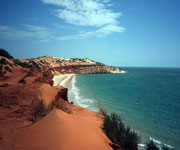
The Ningaloo Coast is located on Western Australia's remote coast along the East Indian Ocean. The interconnected ocean and arid coast form aesthetically striking landscapes and seascapes. The coastal waters host a major near shore reef system and a directly adjacent limestone karst system and associated habitats and species along an arid coastline. The property holds a high level of terrestrial species endemism and high marine species diversity and abundance. An estimated 300 to 500 whale sharks aggregate annually coinciding with mass coral spawning events and seasonal localized increases in productivity. Continent: Oceania Country: Australia Category: Natural Criterion: (VII)(X) Date of Inscription: 2011

The largest sand island in the world

Image
Fraser Island lies just off the east coast of Australia. Stretching over 120 km along the southern coast of Queensland, Fraser Island is the largest sand island in the world. It is a place of exceptional beauty, with long uninterrupted white beaches flanked by strikingly coloured sand cliffs, majestic tall rainforests and numerous freshwater lakes of crystal-clear waters. The massive sand deposits that make up the island are a continuous record of climatic and sea level changes over the past 700,000 years. Continent: Oceania Country: Australia Category: Natural Criterion: (VII)(VIII) (IX) Date of Inscription: 1992

World Heritage Great Barrier Reef System Australia

Image
The Great Barrier Reef is a site of remarkable variety and beauty on the north-east coast of Australia. It the world's most extensive stretch of coral reef and is probably the richest area in terms of faunal diversity in the world. Its great diversity reflects the maturity of an ecosystem which has evolved over millions of years on the north-east continental shelf of Australia. The site contains a huge diversity of species including over 1,500 species of fish, about 360 species of hard coral, 5,000 species of mollusc, and more than 175 species of bird, plus a great diversity of sponges, anemones, marine worms and crustaceans, among others. Continent: Oceania Country: Australia Category: Cultural Criterion: (VII)(VIII) (IX) (X) Date of Inscription: 1981

Chief Roi Mata’s Domain Vanuatu

Image
Chief Roi Mata's Domain is the first site to be inscribed in Vanuatu. It consists of three early 17th century AD sites on the islands of Efate, Lelepa and Artok associated with the life and death of the last paramount chief, or Roi Mata, of what is now Central Vanuatu. The property includes Roi Mata's residence, the site of his death and Roi Mata's mass burial site. It is closely associated with the oral traditions surrounding the chief and the moral values he espoused. The site reflects the convergence between oral tradition and archaeology and bears witness to the persistence of Roi Mata's social reforms and conflict resolution, still relevant to the people of the region. Continent: Oceania Country: Vanuatu Category: Cultural Criterion: (III)(V) (VI) Date of Inscription: 2008

Ningaloo Coast Australia

Image
Ningaloo Coast, the 604,500 hectare marine and terrestrial property of Ningaloo Coast, on the remote western coast of Australia, includes one of the longest near-shore reefs in the world. On land the site features an extensive karst system and network of underground caves and water courses. Annual gatherings of whale sharks occur at Ningaloo Coast, which is home to numerous marine species, among them a wealth of sea turtles. The terrestrial part of the site features subterranean water bodies with a substantial network of caves, conduits, and groundwater streams. They support a variety of rare species that contribute to the exceptional biodiversity of the marine and terrestrial site. Continent: Oceania Country: Australia Category: Cultural Criterion: (VII)(X) Date of Inscription: 2011

Rock Islands Southern Lagoon Palau

Image
Rock Islands Southern Lagoon covers 100,200 ha and includes 445 uninhabited limestone islands of volcanic origin. Many of them display unique mushroom-like shapes in turquoise lagoons surrounded by coral reefs. The aesthetic beauty of the site is heightened by a complex reef system featuring over 385 coral species and different types of habitat. They sustain a large diversity of plants, birds and marine life including dugong and at least thirteen shark species. The site harbours the highest concentration of marine lakes anywhere, isolated bodies of seawater separated from the ocean by land barriers. They are among the islands' distinctive features and sustain high endemism of populations which continue to yield new species discoveries. The remains of stonework villages, as well as burial sites and rock art, bear testimony to the organization of small island communities over some three millennia. The abandonment of the villages in the 17th and 18th centuries illustrates the conseq...

Lord Howe Island Group Heritage

Image
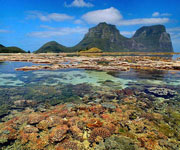
Lord Howe Island a remarkable example of isolated oceanic islands, born of volcanic activity more than 2,000 m under the sea, these islands boast a spectacular topography and are home to numerous endemic species, especially birds. Located in the South Pacific, 700 km north-east of Sydney, the property is included administratively in New South Wales. The preserve includes some 75% of the land area of Lord Howe Island and all of the offshore islands and rocks of significant size in the region. These are the Admiralty Group; Mutton Bird and Sail Rock; Blackburn (Rabbit) Island; Gower Island; and Ball's Pyramid, together with a number of small islands and rocks. The seaward boundary follows the mean high water mark and consequently excludes all littoral and marine areas. The entire island group has remarkable volcanic exposures not known elsewhere. Continent: Oceania Country: Australia Category: Natural Criterion: (VII)(X) Date of Inscription: 1982

World Heritage Sites in Oceania

Image
Oceania has 27 UNESCO heritage sites within 7 countries. The World Heritage Sites in Oceania are categorized by cultural heritage sites, Natural heritage sites, mixed heritage sites (mixed heritage sites means the sites are under natural heritage qualifications and cultural heritage qualifications together as one heritage site) and sites that are in danger list. Within the Oceania continent 16 Natural Heritage Sites, 6 Cultural Heritage Sites and 5 Mixed Heritage Sites are located. The UNESCO news updates daily. See all Latest UNESCO News Oceania UNESCO World Heritage Sites Here is the list of Oceania UNESCO World Heritage Sites in alphabetical order. You can view the sites information below. Click the link next to the name of the site "Visit the site".

World Heritage Countries

Image
There are 34 countries in the Asian continent have UNESCO Heritage Sites. The sites are divided by categories as Natural Heritage Sites, Cultural Heritage Sites, Mixed Heritage Sites and Heritage Sites under danger list. The mixed Heritage Sites recognized by UNESCO that the sites are having the specifications of natural and cultural. Within the Asia 240 UNESCO Heritage sites consists of 44 natural sites, 179 cultural sites, 7 mixed sites and 10 sites are in danger. China is the biggest Asian country has 41 sites followed by India 28 sites and Russian Federation is the third place of 24 sites. World heritage countries are 149. Top 10 UNESCO Countries in the World The first two places belong to Europe. Italy has 47 Heritage site and got first place followed by Spain has 43 sites. The third place goes to Asian country China has 41 sites. Germany 36, Mexico 31, India 28, United Kingdom 28, Russian Federation 24, United States 21 and Canada 15 gaining four to ten respectively. Europ...