Posts

Showing posts with the label South American Heritage Sites

City of Potosi Bolivia

Image
In the pre-Hispanic period, Potosí was only a small hamlet perched at an altitude of 4,000 m, in the icy solitude of the Andes. It owes its prosperity to the discovery, between 1542 and 1545, of the New World's biggest silver lodes in the Cerro de Potosí, the mountain south of the city which overlooks it. As a result, Potosí is directly and tangibly associated with an event of outstanding universal significance: the economic change brought about in the 16th century by the flood of Spanish currency resulting from the massive import of precious metals from the New World into Seville. Continent: South America Country: Bolivia Category: Cultural Criterion: (II)(IV) (VI) Date of Inscription: 1987
Noel Kempff Mercado National Park Bolivia

Image
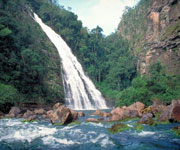
The Kempff Mercado National Park is one of the largest (1,523,000 ha) and most intact parks in the Amazon Basin. With an altitudinal range of 200 m to about 1,000 m, it contains a rich mosaic of habitat types from cerrado savannah and forest to upland evergreen Amazonian forests. The park boasts an evolutionary history dating back over a billion years to the Precambrian. Located on the border with Brazil, the site includes a large section of the Huanchaca Plateau and surrounding lowlands. There are rugged cliffs in the northern, western and southern sides of the plateau, with several valleys and steep slopes in its eastern side. Several rivers have their sources on the plateau and form spectacular waterfalls. The largest river in the area is the Iténez, which marks the border with Brazil, to the north of the park, and the Paraguá River dominates the lowlands to the west. Continent: South America Country: Bolivia Category: Natural Criterion: (IX)(X) Date of Inscription: ...

Historic Centre of Sao Luis Brazil

Image
The Historic Centre of Sao Luis do Maranhao is an outstanding example of a Portuguese colonial town that adapted successfully to the climatic conditions in equatorial South America and which has preserved its urban fabric, harmoniously integrated with its natural setting, to an exceptional degree. The late 17th-century core of this historic town, founded by the French in 1612 and occupied by the Dutch before coming under Portuguese rule, has preserved the original rectangular street plan in its entirety. Thanks to a period of economic stagnation in the early 20th century, an exceptional number of fine historic buildings have survived, making this an outstanding example of an Iberian colonial town. Continent: South America Country: Brazil Category: Cultural Criterion: (III)(IV) (V) Date of Inscription: 1997

Jesuit Missions of the Chiquitos Bolivia

Image
Jesuit Missions sent by the Spanish Crown to assure the conquest of the Indias del Cielo, the Jesuit fathers arrived at the Viceroyalty of Peru in 1567 to bring Christianity to the indigenous communities. The first collegial church was founded in 1577 at Potosí, on Bolivian territory; in 1592 a new house was established at Santa Cruz de la Sierra. The Jesuits seemed to have rationalized, in the Chiquito territory, the model of reducciones (settlements of Christianized Indians) which was largely inspired by the ideal city of the humanist philosophers. Between 1696 and 1760, six groups of reducciones were founded in a style that married Roman Catholic architecture with local traditions. Continent: South America Country: Bolivia Category: Cultural Criterion: (IV)(V) Date of Inscription: 1990

Historic Centre of the Town of Olinda Brazil

Image
The historical centre of Olinda, which is located several kilometres to the north of the harbour installations, industrial zones and skyscrapers of Recife, still retains the charm of a city museum of the colonial period. Olinda was founded in 1537 by the Portuguese Duarte Coelho Pereira and owed its rapid rise to the cultivation of sugar cane in the region of Pernambuco using slave labour. Continent: South America Country: Brazil Category: Cultural Criterion: (II)(IV) Date of Inscription: 1982

Historic City of Sucre Bolivia

Image
The rich heritage of the historic centre of the Spanish city of Sucre (also known as the city of four names - La Plata, Characas, Ciudad Blanca and Sucre) is an excellent, intact and well-preserved illustration of the architectural blending achieved in Latin America through the assimilation of local traditions and styles imported from Europe. The city of La Plata was founded by Pedro de Anzures, Marqués de Campo Rotondo, in 1538. Its foundation was a result of mining activities overseen by Gonzalo Pizarro, who was interested in exploring the highland eastern region of the Andean Cordillera. Continent: South America Country: Bolivia Category: Cultural Criterion: (IV) Date of Inscription: 1991

Historic Town of Ouro Preto Brazil

Image
Historic Town of Ouro Preto is located 513 km north of Rio de Janeiro; Ouro Preto (Black Gold) was the main focal point of the period known as the Golden Age of Brazil. Originally called Vila Rica, this city played a leading role in Brazil's history in the 18th century. It was created by thousands of soldiers of fortune eager to enrich them by exploiting the gold deposits; they were followed by many artists who came to settle and produce works of outstanding quality, such as the São Francisco of Assis church by Antonio Francisco Lisboa (Aleijadinho). Continent: South America Country: Brazil Category: Cultural Criterion: (I)(III) Date of Inscription: 1980

Spiritual and Political Centre of the Tiwanaku Culture

Image
The ruins of Tiwanaku bear striking witness to the power of the empire that played a leading role in the development of the Andean pre-Hispanic civilization. The buildings are exceptional examples of the ceremonial and public architecture and art of one of the most important manifestations of the civilizations of the region. Tiwanaku began as a small settlement, in what is known as its 'village period', around 1200 BCE. It was self-sufficient, with a non-irrigated form of farming based on frost-resistant crops, essential at this high altitude, producing tubers such as potatoes, oca and cereals, notably quinoa. In more sheltered locations near Lake Titicaca, maize and peaches were also cultivated. The inhabitants lived in rectangular adobe houses that were linked by paved streets. Continent: South America Country: Bolivia Category: Cultural Criterion: (III)(IV) Date of Inscription: 2000

Boyana Church Bulgaria

Image
Boyana Church is located on the outskirts of Sofia; Boyana Church consists of three buildings. The Eastern Church was built in the 10th century, and then enlarged at the beginning of the 13th century by Sebastocrator Kaloyan, who ordered a second two storey building to be erected next to it. During the middle Ages the strong Bulgarian fortress of Boyana (Batil) stood on the lower slopes of Mount Vitosha in what is now the Sofia suburb of Boyana. This name is mentioned for the first time in 969. Boyana was one of the 35 fortresses and settlements that formed the fortification systems of the city of Sredets (Sofia). Boyana Church was built within the fortress and is a magnificent example of medieval architecture and monumental art. Continent: South America Country: Brazil Category: Cultural Criterion: (II)(III) Date of Inscription: 1979

Fuerte de Samaipata Bolivia

Image
Samaipata bears outstanding witness to the existence in this Andean region of a political culture with highly developed religious traditions, illustrated dramatically in the form of the dominant ceremonial feature of this site, its immense rock sculptures. The site is known to have been occupied and used as a ritual and residential centre by people belonging to the Mojocoyas culture as early as AD 300, and it was at this time that work began on the shaping of this great rock. It was occupied in the 14th century by the Inca, who made it a provincial capital. This is confirmed by the features that have been discovered by excavation - a large central plaza with monumental public buildings around it and terracing of the neighbouring hillsides for agriculture - which are characteristic of this type of Inca settlement. It formed a bulwark against the incursions of the warlike Chiriguanos of the Chaco region in the 1520s. Continent: Southe America Country: Bolivia Category: Cultur...

Mountain Wonder Machu Picchu Peru

Image
Mountain Wonder Machu Picchu bears, with Cuzco and the other archaeological sites of the valley of the Urubamba (Ollantautaybo, Runcuracay, Sayacmarca, Phuyupamarca, Huiñay Huayna, Intipucu, etc.) a unique testimony to the Inca civilization. Cuzco and the old villages still retain traces of land occupation from the Inca Empire to preserve, in a more global manner, an archaeological heritage which has become susceptible to the effects of urbanization. Furthermore, Macchu Picchu is an outstanding example of man's interaction with his natural environment. Continent: South America Country: Peru Category: Mixed Heritage Criterion: (I) (III) (VII) (IX) Date of Inscription: 1983

Colonia del Sacramento Uruguay

Image
The Historic Quarter of the City of Colonia del Sacramento bears remarkable testimony in its layout and its buildings to the nature and objectives of European colonial settlement, in particular during the seminal period at the end of the 17th century. Dom Pedro, Prince Regent of Portugal, commissioned his chief minister Manuel Lobo, named Governor of Rio de Janeiro, in 1678 to found a settlement on the Río de la Plata, on the island of St Gabriel. Work began in 1680 and in 1690 Master Church and the Franciscan convent were built. Continent: South America Country: Uruguay Category: Cultural Criterion: (IV) Date of Inscription: 1995

Ciudad Universitaria de Caracas Venezuela

Image
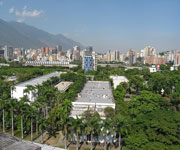
The University City of Caracas is an outstanding example, and one of the best in the world, of the modern urban, architectural and artistic concepts of the early 20th century. It therefore illustrates in an excellent way this recent but already significant period in human history. The urban and architectural spaces created by Carlos Raúl Villanueva in association with the works of the artists who participated in the 'integration of the arts' are of incomparable quality and character. The essence of the work is in the message and the aesthetic emotion that its authors have managed to transmit. Continent: South America Country: Venezuela Category: Cultural Criterion: (I)(IV) Date of Inscription: 2000

World Heritage Canaima National Park

Image
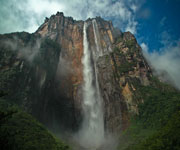
Canaima National Park is spread over 3 million ha in south-eastern Venezuela along the border between Guyana and Brazil. Roughly 65% of the park is covered by table mountain (tepui) formations. The tepuis constitute a unique biogeological entity and are of great geological interest. The sheer cliffs and waterfalls, including the world's highest (1,000 m), form a spectacular landscape. Canaima was established as a national park in 1962 and its size was doubled to the present area in 1975 and inscribed Word Heritage in 1994. Continent: South America Country: Venezuela Category: Natural Criterion: (VII)(VIII) (IX) (X) Date of Inscription: 1994

Sao Francisco Square Brazil

Image
Sao Francisco Square in the Town of Sao Cristovao is a quadrilateral open space surrounded by substantial early buildings such as Sao Francisco Church and convent, the Church and Santa Casa da Misericórdia, the Provincial Palace and the associated houses of different historical periods surrounding the Square. This monumental ensemble, together with the surrounding 18th- and 19th- century houses, creates an urban landscape which reflects the history of the town since its origin. The Franciscan complex is an example of the typical architecture of the religious order developed in north-eastern Brazil. Continent: South America Country: Brazil Category: Cultural Criterion: (II)(IV) Date of Inscription: 2010

Sewell Mining Town Chile

Image
Sewell Mining Town is situated at 2,000 m in the Andes, 60 km to the east of Rancagua, in an environment marked by extremes of climate, Sewell Mining Town was built by the Braden Copper company in 1905 to house workers at what was to become the world's largest underground copper mine, El Teniente. It is an outstanding example of the company towns that were born in many remote parts of the world from the fusion of local labour and resources from an industrialized nation, to mine and process high-value natural resources. The town was built on a terrain too steep for wheeled vehicles around a large central staircase rising from the railway station. Along its route formal squares of irregular shape with ornamental trees and plants constituted the main public spaces or squares of the town. The buildings lining the streets are timber, often painted in vivid green, yellow, red and blue. At its peak Sewell numbered 15,000 inhabitants, but was largely abandoned in the 1970s. Contine...

Humberstone and Santa Laura Saltpeter Works Chile

Image
Humberstone and Santa Laura works contain over 200 former saltpeter works where workers from Chile, Peru and Bolivia lived in company towns and forged a distinctive communal pampinos culture. That culture is manifest in their rich language, creativity, and solidarity, and, above all, in their pioneering struggle for social justice, which had a profound impact on social history. Situated in the remote Pampas, one of the driest deserts on Earth, thousands of pampinos lived and worked in this hostile environment for over 60 years, from 1880, to process the largest deposit of saltpeter in the world, producing the fertilizer sodium nitrate that was to transform agricultural lands in North and South America, and in Europe, and produce great wealth for Chile. Continent: South America Country: Chile Category: Danger Criterion: (II) (III) (IV) Date of Inscription: 2005

Rapa Nui National Park Chile

Image
Rapa Nui, the indigenous name of Easter Island, bears witness to a unique cultural phenomenon. A society of Polynesian origin that settled there c. A.D. 300 established a powerful, imaginative and original tradition of monumental sculpture and architecture, free from any external influence. From the 10th to the 16th century this society built shrines and erected enormous stone figures known as moai , which created an unrivalled cultural landscape that continues to fascinate people throughout the world. Rapa Nui contains one of the most remarkable cultural phenomena in the world. Continent: South America Country: Chile Category: Cultural Criterion: (I) (III) (V) Date of Inscription: 1995

Pantanal Conservation Area Brazil

Image
The Pantanal Conservation Complex consists of a cluster of four protected areas with a total area of 187,818 ha. Located in western central Brazil at the south-west corner of the State of Mato Grosso, the site represents 1.3% of Brazil's Pantanal region, one of the world's largest freshwater wetland ecosystems. The headwaters of the region's two major river systems, the Cuiabá and the Paraguay rivers, are located here, and the abundance and diversity of its vegetation and animal life are spectacular. Continent: South America Country: Brazil Category: Natural Criterion: (VII)(IX) (X) Date of Inscription: 2000

Central Amazon Conservation Complex Brazil

Image
The Central Amazon Conservation Complex makes up the largest protected area in the Amazon Basin (over 6 million hectares) and is one of the planet's richest regions in terms of biodiversity. It also includes an important sample of varzea ecosystems, igapó forests, lakes and channels which take the form of a constantly evolving aquatic mosaic that is home to the largest array of electric fish in the world. The site protects key threatened species, including giant arapaima fish, the Amazonian manatee, the black caiman and two species of river dolphin. The varzea and igapó forests, lakes, rivers, and islands of the proposed site together constitute physical and biological formations and demonstrate ongoing ecological processes in the development of terrestrial and freshwater ecosystems. Continent: South America Country: Brazil Category: Natural Criterion: (IX)(X) Date of Inscription: 2000