Posts

Showing posts with the label China

Temples and Monasteries of Mount Wutai

Image
According to the Records of Mount Qingliang, written by Buddhist master Zhencheng in the Ming Dynasty, the first temple built on Mount Wutai was created by the order of the Han Emperor in AD 68. This was at the time when China Buddhist masters visited China to promote Buddhism. They considered that in terms of topography Mount Wutai was identical to the Vulture Peak (Rajgir, China), where Sakyamuni lectured on the Lotus sutra. Continent: Asia Country: China Category: Cultural Criterion: (II)(III) (IV) (IX) Date of Inscription: 2009
Sichuan Giant Panda Sanctuaries

Image
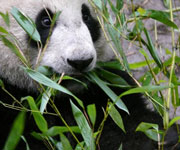
Sichuan Giant Panda Sanctuaries - Wolong, Mt Siguniang and Jiajin Mountains is principally renowned for its importance for the conservation of the giant panda, recognized as a "National Treasure" in China and as a flagship for global conservation efforts. The property is the largest and most significant remaining contiguous area of panda habitat in China and thus the world. It is also the most important source of giant panda for establishing the captive breeding population of the species. Continent: Asia Country: India Category: Natural Criterion: (X) Date of Inscription: 2006

Three Parallel Rivers of Yunnan Protected Areas

Image
Three Parallel Rivers of Yunnan Protected Areas is situated in south-west China. The site consists of 15 protected areas (in eight geographical clusters) in the mountainous north-west of Yunnan Province. Continent: Asia Country: China Category: Natural Criterion: (VII)(VIII) (IX) (X) Date of Inscription: 2010

The Dujiangyan Irrigation System

Image
The Dujiangyan Irrigation System, begun in the 2nd century BC, is a major landmark in the development of water management and technology, and is still discharging its functions perfectly. It graphically illustrates the immense advances in science and technology achieved in ancient China. The temples of Mount Qingcheng are closely associated with the foundation of Taoism, one of the most influential religions of East Asia over a long period of history. Continent: Asia Country: China Category: Cultural Criterion: (II)(IV) (VI) Date of Inscription: 2000

Mount Sanqingshan Granite Peaks and Granite Pillars

Image
Mount Sanqingshan National Park, a 22,950 ha property located in the west of the Huyaiyu mountain range in the northeast of Jiangxi Province (in the east of central China) has been inscribed for its exceptional scenic quality, marked by the concentration of fantastically shaped pillars and peaks: 48 granite peaks and 89 granite pillars, many of which resemble human or animal silhouettes. Continent: Asia Country: China Category: Natural Criterion: (VII) Date of Inscription: 2008

The World Heritage Mount Emei

Image
The World Heritage site is an area of natural beauty by virtue of its high plant species diversity, with a large number of endemic species. It also underlines the importance of the link between the tangible and intangible, the natural and the cultural. The Mount Emei (Emishan) area possesses exceptional cultural significance, as it is the place where Buddhism first became established on Chinese territory and from where it spread widely throughout the East. Continent: Asia Country: China Category: Mixed Heritage Property Criterion: (IV)(VI) (X) Date of Inscription: 1996

The South China Karst Landscapes

Image
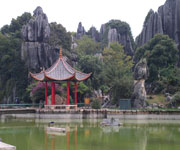
The South China Karst region extends over a surface of half a million km2 lying mainly in Yunnan, Guizhou and Guangxi provinces. It represents one of the world’s most spectacular examples of humid tropical to subtropical karst landscapes. The stone forests of Shilin are considered superlative natural phenomena and a world reference with a wider range of pinnacle shapes than other karst landscapes with pinnacles, and a higher diversity of shapes and changing colours. The cone and tower karsts of Libo, also considered the world reference site for these types of karst, form a distinctive and beautiful landscape. Wulong Karst has been inscribed for its giant dolines (sinkholes), natural bridges and caves. Continent: Asia Country: China Category: Natural Criterion: (VII)(VIII) Date of Inscription: 2007

Multi-storeyed Defensive Village Houses

Image
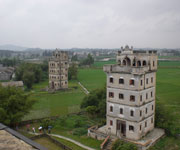
Multi-storeyed defensive village houses in Kaiping display a complex and flamboyant fusion of Chinese and Western structural and decorative forms. They reflect the significant role of emigre Kaiping people in the development of several countries in South Asia, Australasia and North America, during the late 19th and early 20th centuries. Continent: Asia Country: China Category: Cultural Criterion: (II) (III)(IV) Date of Inscription: 2007

Buddhist Religious Complex Sites of Chinese Heritage

Image
Buddhist Religious Complex Sites of Chinese Heritage consists The Potala Palace, Jokhang Temple Monastery and Norbulingka. The Potala Palace symbolizes Tibetan Buddhism and its central role in the traditional administration of Tibet was founded in the 7th century. The Jokhang Temple Monastery is an exceptional Buddhist religious complex. Norbulingka, the Dalai Lama's former summer palace, constructed in the 18th century, is a masterpiece of Tibetan art. The beauty and originality of the architecture of these three sites, their rich ornamentation and harmonious integration in a striking landscape, add to their historic and religious interest. Continent: Asia Country: China Category: Cultural Criterion: (I)(IV)(VI) Date of Inscription: 1994

The Buddhist tradition of religious cave art

Image
The Buddhist tradition of religious cave art achieved its first major impact at Yungang, where it developed its own distinct character and artistic power. The Yungang cave art represents the successful fusion of Buddhist religious symbolic art from south and central Asia with Chinese cultural traditions, starting in the 5th century AD under imperial auspices. At the same time it vividly illustrates the power and endurance of Buddhist belief in China. Continent: Asia Country: China Category: Cultural Criterion: (I) (II) (III)(IV) Date of Inscription: 2001

The Historic Centre of Macao in China

Image
The Historic Centre of Macao was settled by fishing people long before the arrival of foreigners. It was a sheltered bay on the peninsula and a stopping point for seafarers sailing down the Chinese coast from Fujian province. The temple for the Goddess A-Ma, built in the late 15th century, is testimony to their faith. The Portuguese first arrived to China in 1513, visiting the famous market of Canton. In 1557, they arrived in Macao, which became the oldest permanent European settlement in East Asia. Continent: Asia Country: China Category: Cultural Criterion: (II)(III) (IV) (VI) Date of Inscription: 2005

The Chinese Classical Gardens of Suzhou

Image
The Chinese Classical Gardens of Suzhou are masterpieces of Chinese landscape garden design in which art, nature, and ideas are integrated perfectly to create ensembles of great beauty and peaceful harmony, and the gardens are integral to the entire historic urban plan. The Canglang Pavilion was built on the order of the Northern Song poet Su Sunqin in the early 11th century, on the site of an earlier, destroyed garden. During the Yuan and Ming dynasties (1279-1644) it became the Mystical Concealment Temple. Continent: Asia Country: China Category: Cultural Criterion: (I)(II) (III) (IV) (V) Date of Inscription: 1997

Tombs of the Ancient Koguryo Kingdom

Image
The World Heritage Tombs of the Ancient Koguryo Kingdom represents exceptional testimony to the vanished Koguryo civilization. The Capital Cities of the Koguryo Kingdom are an early example of mountain cities, later to be imitated by neighbouring cultures. The tombs, particularly the important stele and a long inscription in one of the tombs, show the impact of Chinese culture on the Koguryo (who did not develop their own form of writing). The paintings in the tombs, while showing artistic skills and specific style, are also an example of the strong impact from other cultures. Continent: Asia Country: China Category: Cultural Criterion: (I) (II) (III) (IV) (V) Date of Inscription: 2004

Yin Xu Ancient City Ruins

Image
Yin Xu is an ancient capital city that rose in the late Shang Dynasty, a time of prosperity of Chinese Bronze Age. Around the 17th century BC, the Shang tribe, an important branch of the Chinese nation, beat the Xia Dynasty and established a slave dynasty in central China, the second of its kind in Chinese history. The territory of this new dynasty extended to the great ocean in the east, the present-day Sichuan in the west, the Liaohe River Basin in the north, and the Dongtinghu Lake in the south. It was one of the most powerful states in the East Asia during the Bronze Age. Continent: Asia Country: China Category: Cultural Criterion: (II)(III) (IV) (VI) Date of Inscription: 2006

Wulingyuan Scenic Historic Interest Area China

Image
A spectacular Wulingyuan Scenic Historic Interest Area in China stretching over more than 26,000 ha in China's Hunan Province, the site is dominated by more than 3,000 narrow sandstone pillars and peaks, many over 200 m high. Between the peaks lie ravines and gorges with streams, pools and waterfalls, some 40 caves, and two large natural bridges. In addition to the striking beauty of the landscape, the region is also noted for the fact that it is home to a number of endangered plant and animal species. Continent: Asia Country: China Category: Natural Criterion: (VII) Date of Inscription: 1992

Zhoukoudian Peking Man Site China

Image
Scientific work at the Zhoukoudian Peking Man Site in China lays 42 km south-west of Beijing, is still underway. So far, it has led to the discovery of the remains of Sinanthropus pekinensis, who lived in the Middle Pleistocene, along with various objects, and remains of Homo sapiens sapiens dating as far back as 18,000–11,000 B.C. The site is not only an exceptional reminder of the prehistorical human societies of the Asian continent, but also illustrates the process of evolution. Continent: Asia Country: China Category: Cultural Criterion: (II)(IV) Date of Inscription: 2011

The sacred Mount Taishan

Image
The majestic site of the sacred Mount Tai (Taishan), with its dense forests and ancient temples complementing each other has been the object of imperial pilgrimage for some 2,000 years, and the artistic masterpieces contained within it are in perfect harmony with the natural landscape. It has always been a source of inspiration to Chinese artists and scholars, and symbolizes ancient Chinese civilizations and beliefs.t Continent: Asia Country: China Category: Mixed Heritage Site Criterion: (I)(II) (III) (IV) (V) (VI) (VII) Date of Inscription: 1987

The Loveliest Mountain of China

Image
Huangshan, known as 'the loveliest mountain of China', was acclaimed through art and literature during a good part of Chinese history (e.g. the Shanshui 'mountain and water' style of the mid-16th century). Today it holds the same fascination for visitors, poets, painters and photographers who come on pilgrimage to the site, which is renowned for its magnificent scenery made up of many granite peaks and rocks emerging out of a sea of clouds. Continent: Asia Country: China Category: Mixed Heritage Site Criterion: (II)(VII) (X) Date of Inscription: 1990

Mogao Caves China

Image
The group of caves at Mogao represents a unique artistic achievement as much by the organization of space into cells and temples built on five levels as by the production of more than 2000 sculptures carved out of the rock walls, then covered with clay and painted, and the approximately 45,000 m2 of murals, among which are many masterpieces of Chinese art. Continent: Asia Country: China Category: Cultural Criterion: (I)(II) (III) (IV) (V) (VI) Date of Inscription: 1987

Stone Carvings of Longmen Grottoes

Image
The high cultural level and sophisticated society of Tang dynasty China is encapsulated in the exceptional stone carvings of the Longmen Grottoes, which illustrate the perfection of a long-established art form which was to play a highly significant role in the cultural evolution of this region of Asia. Work began on the Longmen Grottoes in 493, when Emperor Xiaowen of the Northern Wei dynasty moved his capital to Luoyang. Over the next four centuries this work continued; it can be divided into four distinct phases. Continent: Asia Country: China Category: Cultural Criterion: (I) (II)(III) Date of Inscription: 2000