Posts

Showing posts with the label Italy

Villa Romana del Casale Italy
Image
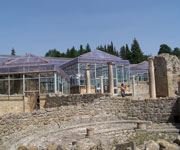
Villa del Casale at Piazza Armerina is the supreme example of a luxury Roman villa, graphically illustrating the predominant social and economic structure of its age. Its decorative mosaics are exceptional for their artistic quality and invention as well as their extent.An earlier rural settlement generally thought to have been a farm, although on slender evidence, existed on the site where the late Roman villa was built. Its orientation was the same as that of the baths of the villa, and its foundations were discovered beneath parts of the villa. Continent: Europe Country: Italy Category: Cultural Criterion: (I) (II) (III) Date of Inscription: 1997
Villa Adriana Italy

Image
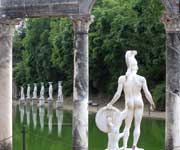
The Villa Adriana (at Tivoli, near Rome) is an exceptional complex of classical buildings created in the 2nd century A.D. by the Roman emperor Hadrian. It combines the best elements of the architectural heritage of Egypt, Greece and Rome in the form of an 'ideal city'. The Villa Adriana is a masterpiece that uniquely brings together the highest expressions of the material cultures of the ancient Mediterranean world. Study of the monuments that make up the Villa Adriana played a crucial role in the rediscovery of the elements of classical architecture by the architects of the Renaissance and the Baroque period. It also profoundly influenced many 19th and 20th century architects and designers. Continent: Europe Country: Italy Category: Cultural Criterion: (I) (II) (III) Date of Inscription: 1999

The Patriarchal Basilica of Aquileia Italy

Image
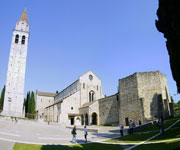
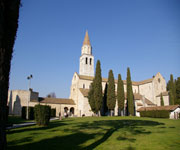
Aquileia one of the largest and wealthiest cities of the Early Roman Empire, was destroyed by Attila in the mid-5th century. Most of it still lies unexcavated beneath the fields, and as such it constitutes the greatest archaeological reserve of its kind. The patriarchal basilica, an outstanding building with an exceptional mosaic pavement, played a key role in the evangelization of a large region of central Europe. Aquileia was one of the largest and most wealthy cities of the Early Roman Empire. By virtue of the fact that most of ancient Aquileia survives intact and unexcavated, it is the most complete example of an Early Roman city in the Mediterranean world. The Patriarchal Basilica Complex in Aquileia played a decisive role in the spread of Christianity into central Europe in the early middle Ages. Continent: Europe Country: Italy Category: Cultural Criterion: (III)(IV) (VI) Date of Inscription: 1998

Su Nuraxi di Barumini Italy

Image
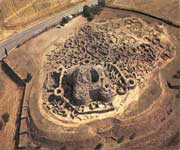
The nuraghi of Sardinia, of which Su Nuraxi is the pre-eminent example, represent an exceptional response to political and social conditions, making an imaginative and innovative use of the materials and techniques available to a prehistoric island community.During the middle and late Bronze Age (c . 1500-800 BC) on Sardinia a unique form of architecture developed: circular defensive towers in the form of truncated cones built from dressed stone, with corbel-vaulted internal chambers. Some (as at Barumini) were surrounded by quadrilobate enclosures consisting of towers linked by massive walls. Villages of small circular-plan houses developed around these strongpoints. Continent: Europe Country: Italy Category: Cultural Criterion: (I)(III) (IV) Date of Inscription: 1997

City of Verona Italy

Image
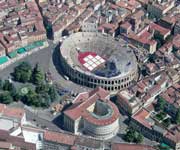
The historic city of Verona was founded in the 1st century B.C. It particularly flourished under the rule of the Scaliger family in the 13th and 14th centuries and as part of the Republic of Venice from the 15th to 18th centuries. Verona has preserved a remarkable number of monuments from antiquity, the medieval and Renaissance periods, and represents an outstanding example of a military stronghold. Verona is an outstanding example of a town that has developed progressively and uninterruptedly over two thousand years, incorporating artistic elements of the highest quality from each succeeding period. Verona represents in an exceptional way the concept of the fortified town at several seminal stages of European history. Continent: Europe Country: Italy Category: Cultural Criterion: (II)(IV) Date of Inscription: 2000

Cilento and Vallo di Diano National Park Italy

Image
Cilento and Vallo di Diano National Park with the Archeological sites of Paestum and Velia, and the Certosa di Padula; The Cilento is an outstanding cultural landscape. The dramatic groups of sanctuaries and settlements along its three east–west mountain ridges vividly portray the area's historical evolution: it was a major route not only for trade, but also for cultural and political interaction during the prehistoric and medieval periods. The Cilento was also the boundary between the Greek colonies of Magna Graecia and the indigenous Etruscan and Lucanian peoples. The remains of two major cities from classical times, Paestum and Velia, are found there. Continent: Europe Country: Italy Category: Cultural Criterion: (III)(IV) Date of Inscription: 1998

Portovenere Cinque Terre and the Islands Italy

Image
The eastern Ligurian Riviera between Cinque Terre and Porto Venere is a cultural site of outstanding value, representing the harmonious interaction between man and nature to produce a landscape of exceptional scenic quality that illustrates a traditional way of life that has existed for 1,000 years and continues to play an important socio-economic role in the life of the community.The area covers some 15 km along the extreme eastern end of the Ligurian coast, between Levanto and La Spezia. It is a very jagged, steep coastline, which the work of man over the millennia has transformed into an intensively terraced landscape so as to be able to wrest from nature a few hectares of land suitable for agriculture, such as growing vines and olive trees. Continent: Europe Country: Italy Category: Cultural Criterion: (I)(IV) (V) Date of Inscription: 1997

Costiera Amalfitana Italy

Image
Costiera Amalfitana is an outstanding example of a Mediterranean landscape, with exceptional cultural and natural scenic values resulting from its dramatic topography and historical evolution. The area covers 11,231 ha in 15 Communes in the Province of Salerno. Its natural boundary is the southern slope of the peninsula formed by the Lattari hills which, stretching from the Picentini hills to the Tyrrhenian Sea, separate the Gulf of Naples from the Gulf of Salerno. It consists of four main stretches of coast (Amalfi, Atrani, Reginna Maior, Reginna Minor) with some minor ones (Positano, Praiano, Certaria, Hercle), with the mountain villages of Scala, Tramonti and Ravello and hamlets of Conca and Furore behind and above them. Continent: Europe Country: Italy Category: Cultural Criterion: (II)(IV) (V) Date of Inscription: 1997

Longobards in Italy

Image
The Longobards in Italy, Places of Power, 568 - 774 A.D. comprises seven groups of important buildings (including fortresses, churches, and monasteries) throughout the Italian Peninsula. They testify to the high achievement of the Lombards, who migrated from northern Europe and developed their own specific culture in Italy where they ruled over vast territories in the 6th to 8th centuries. The Lombards synthesis of architectural styles marked the transition from Antiquity to the European Middle Ages, drawing on the heritage of Ancient Rome, Christian spirituality, Byzantine influence and Germanic northern Europe. The serial property testifies to the Lombards' major role in the spiritual and cultural development of Medieval European Christianity, notably by bolstering the monastic movement. Continent: Europe Country: Italy Category: Cultural Criterion: (II) (III)(VI) Date of Inscription: 2011

Prehistoric Pile dwellings around the Alps

Image
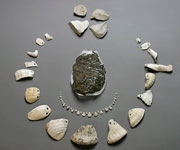
This serial property of 111 small individual sites encompasses the remains of prehistoric pile-dwelling settlements in and around the Alps built from around 5000 to 500 B.C. on the edges of lakes, rivers or wetlands. Excavations, only conducted in some of the sites, have yielded evidence that provides insight into life in prehistoric times during the Neolithic and Bronze Age in Alpine Europe and the way communities interacted with their environment. Fifty-six of the sites are located in Switzerland. The settlements are a unique group of exceptionally well-preserved and culturally rich archaeological sites, which constitute one of the most important sources for the study of early agrarian societies in the region. Continent: Europe Country: Austria, France, Germany, Italy, Switzerland Category: Cultural Criterion: (IV)(V) Date of Inscription: 2011