Posts

Showing posts with the label Zimbabwe

Mana Pools National Park, Sapi and Chewore Safari Areas World Heritage Site
Image
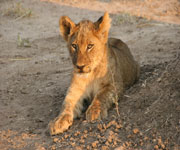
The Mana Pools National Park, Sapi and Chewore Safari Areas World Heritage Site is an area of dramatic landscape and ecological processes. Physically protected by the Zambezi River to the north and the steep escarpment (which rises to over 1,000 m from the valley floor) to the south, this substantial property of 676,600 ha provides shelter for immense congregations of Africa's large mammal populations which concentrate in its flood plains. The Mana Pools are former channels of the Zambezi River, and ongoing geological processes present a good example of erosion and deposition by a large seasonal river including a clear pattern of plant succession on its alluvial deposits. While black rhino has disappeared since the property's inscription, huge herds of elephant and buffalo, followed by zebra, waterbuck and many other antelope species and their associated predators including lion and hyena migrate to the area each year during the dry winter months. Continent: Africa Co...
World Heritage Great Zimbabwe National Monument

Image
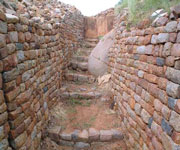
Great Zimbabwe National Monument is approximately 30 km from Masvingo and located in the lowveld at an altitude of some 1100 m in a sparsely populated region of the Bantu/Shona people. The property, built between 1100 and 1450 AD, extends over almost 800 ha and is divided into three groups: the Hill Ruins, the Great Enclosure and the Valley Ruins. The Hill Ruins, forming a huge granite mass atop a spur facing north-east/south-west, were continuously inhabited from the 11th to 15th centuries, and there are numerous layers of traces of human settlements. Rough granite rubble-stone blocks form distinct enclosures, accessed by narrow, partly covered, passageways. This acropolis is generally considered a 'royal city'; the west enclosure is thought to have been the residence of successive chiefs and the east enclosure, where six steatite upright posts topped with birds were found, considered to serve a ritual purpose. Continent: Africa Country: Zimbabwe Category: Cultural...

Khami Ruins National Monument Zimbabwe

Image
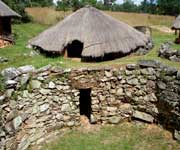
Khami Ruins National Monument is located to the west of the Khami River, 22 km from the City of Bulawayo. The property, located on a 1300 m hilltop downstream from a dam built during 1928-1929, covers an area of about 108 ha, spread over a distance of about 2 km from the Passage Ruin to the North Ruin. The property was the capital of the Torwa dynasty, which arose from the collapse of the Great Zimbabwe Kingdom between 1450 -1650 and was abandoned during the Ndebele incursions of the 19th century. It is composed of a complex series of platforms of dry-stone walled structures, emulating a later development of Stone Age culture. The chief's residence (Mambo) was located towards the north on the Hill Ruin site with its adjacent cultivation terraces. The population lived in daga huts of cobwork, surrounded by a series of granite walls. Continent: Africa Country: Zimbabwe Category: Cultural Criterion: (III)(IV) Date of Inscription: 1986

Mosi-oa-Tunya Victoria Falls

Image
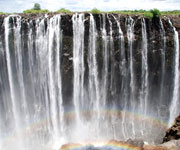
The Mosi-oa-Tunya or Victoria Falls National Park contains one of the world's most spectacular waterfalls. The falls and associated gorges are an outstanding example of river capture and the erosive forces of the water still continue to sculpture the hard basalts. The complex of conservation areas in Zimbabwe covers over 1,846,700 ha excluding forest reserves. The park abuts Dambwa Forest Reserve in Zambia. The falls are the most significant feature of the park, and when the Zambezi is in full flood (usually February or March) they form the largest curtain of falling water in the world. During these months, over 500 million litres of water per minute go over the falls, which are 1,708 m wide, and drop 99 m at Rainbow Falls in Zambia. At low water in November flow can be reduced to around 10 million litres per minute, and the river is divided into a series of braided channels that descend in many separate falls. Continent: Africa Country: Zimbabwe, Natural Category: Natu...

Matobo Hills Zimbabwe

Image
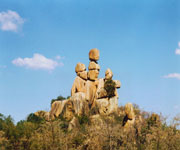
The Matobo Hills have one of the highest concentrations of rock art in Southern Africa. The rich evidence from archaeology and from the rock paintings at Matobo provide a very full picture of the lives of foraging societies in the Stone Age and the way agricultural societies came to replace them. The interaction between communities and the landscape, manifest in the rock art and also in the long-standing religious traditions still associated with the rocks, are community responses to a landscape. The Mwari religion, centred on Matobo, which may date back to the Iron Age, is the most powerful oracular tradition in southern Africa. Continent: Africa Country: Zimbabwe Category: Cultural Criterion: (III)(V) (VI) Date of Inscription: 2003