Posts

Showing posts with the label Vietnam

Phong Nha-Ke Bang National Park Vietnam

Image
The karst formation of Phong Nha-Ke Bang National Park has evolved since the Palaeozoic (some 400 million years ago) and so is the oldest major karst area in Asia. Subject to massive tectonic changes, the park's karst landscape is extremely complex with many geomorphic features of considerable significance. The vast area, extending to the border of the Lao People's Democratic Republic, contains spectacular formations including 65 km of caves and underground rivers. Phong Nha - Ke Bang National Park is located in the middle of the Annamite Mountain Range in Quang Binh province, Vietnam and shares its boundary with the Hin Namno Nature Reserve in the Lao PDR to the west. The property comprises an area of 85,754 ha and contains terrestrial and aquatic habitats, primary and secondary forest, sites of natural regeneration, tropical dense forests and savanna and is rich in large, often spectacular and scientifically significant caves. Continent: Asia Country: Vietnam Cate...

My Son Sanctuary Vietnam

Image
My Son, the name in Vietnamese means "Beautiful Mountain" was sacred to the Dua clan, who worshipped the mythical king Srisanabhadresvara and governed Amaravati, the northern part of the kingdom. The Champa Kingdom began in AD 192 when the people of the Tuong Lam area rose up against their Chinese overlords and founded an independent state in the narrow strip of land along the coast of central Vietnam. This state is known from sporadic Chinese records, in which it appeared successively as Lam Ap, Hoan Vuong, and then Chiem Thanh, a transcription of Champapura, meaning "the city of the Cham people." The Cham economy was based on farming (wet-rice agriculture), fishing, and seaborne trade. Continent: Asia Country: Vietnam Category: Cultural Criterion: (II)(III) Date of Inscription: 1999

Hoi An Ancient Town Vietnam

Image
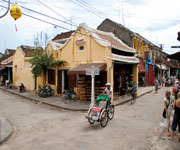
Hoi an Ancient Town is an exceptionally well-preserved example of a South-East Asian trading port dating from the 15th to the 19th century. Its buildings and its street plan reflect the influences, both indigenous and foreign, that have combined to produce this unique heritage site. The town is a special example of a traditional trading port in South-East Asia which has been completely and assiduously preserved: it is the only town in Viet Nam that has survived intact in this way. Most of the buildings are in the traditional architectural style of the 19th and 20th centuries. They are aligned along narrow lanes of traditional type. They include many religious buildings, such as pagodas, temples, meeting houses, etc., which relate to the development of a port community. The traditional lifestyles, religion, customs and cooking have been preserved and many festivals still take place annually. Continent: Asia Country: Vietnam Category: Cultural Criterion: (II)(V) Date of I...

World Heritage Ha Long Bay Vietnam

Image
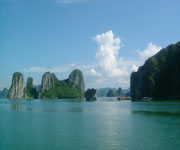
Ha Long Bay, situated in the Gulf of Tonkin, includes some 1600 islands and islets forming a spectacular seascape of limestone pillars. Because of their precipitous nature, most of the islands are uninhabited and relatively unaffected by human influence. The geomorphology of Ha Long Bay is known as a drowned karst landscape due to the exceptional combination of its limestone karst features which have been subject to repeated regression and transgression of the sea over geological time. The limestones of Ha Long Bay have been eroded into a mature landscape of fengcong (clusters of conical peaks) and fenglin (isolated tower features) karst features, modified by sea invasion at a later stage. Continent: Asia Country: Vietnam Category: Natural Criterion: (II)(IV) Date of Inscription: 1994

Complex of Hue Monuments Vietnam

Image
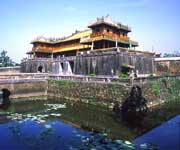
Complex of Hue Monuments represents an outstanding demonstration of the power of the vanished Vietnamese feudal empire at its apogee in the early 19th century. The complex of monuments is an outstanding example of an eastern feudal capital and of the planning and construction of a complete defended capital city in a relatively short period. The integrity of town layout and building design make it an exceptional specimen of late feudal urban planning. Hue served as the administrative centre of southern Vietnam in the 17th and 18th centuries. Gia Long, first ruler of the Nguyen dynasty, made it the national capital of united Vietnam in 1802, a position that it held until 1945. Continent: Asia Country: Vietnam Category: Cultural Criterion: (IV) Date of Inscription: 1993

Central Sector of the Imperial Citadel of Thang Long

Image
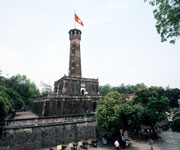
The Central Sector of the Imperial Citadel of Thang Long -- Hanoi, located in the heart of the capital of Viet Nam, is the most important and best-preserved part of the ancient Imperial Citadel of Thang Long. The Thang Long Imperial Citadel was built in the 11th century by the Vietnamese Ly Dynasty, marking the independence of the Đại Việt. It was built on the remains of a Chinese fortress dating from the 7th century, on drained land reclaimed from the Red River Delta in Hanoi. It was the centre of regional political power for almost thirteen centuries without interruption. Continent: Asia Country: Vietnam Category: Cultural Criterion: (II)(III) (VI) Date of Inscription: 2010

Citadel of the Ho Dynasty Vietnam

Image
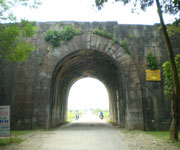
The Citadel of Ho Dynasty built in 1397, composed of the Inner Citadel, La Thanh Outer Wall and the Nam Giao Altar covers 155.5 ha, surrounded by a buffer zone of 5078.5 ha. It is located in accordance with geomantic principles in a landscape of great scenic beauty between the Ma and Buoi rivers in Vinh Loc district, Thanh Hoa province of Viet Nam. The Inner Citadel constructed of large limestone blocks represents a new development of architectural technology and adaptation of geomantic city planning in an East Asian and South-east Asian context. It demonstrates the use of architectural elements in terms of space management and decoration designed for a centralized imperial city in order to show a concept of royal power, based on the adoption of the Confucian philosophy within a predominantly Buddhist culture. Continent: Asia Country: Vietnam Category: Cultural Criterion: (II)(IV) Date of Inscription: 2011