Posts

Showing posts with the label Bolivia

City of Potosi Bolivia

Image
In the pre-Hispanic period, Potosí was only a small hamlet perched at an altitude of 4,000 m, in the icy solitude of the Andes. It owes its prosperity to the discovery, between 1542 and 1545, of the New World's biggest silver lodes in the Cerro de Potosí, the mountain south of the city which overlooks it. As a result, Potosí is directly and tangibly associated with an event of outstanding universal significance: the economic change brought about in the 16th century by the flood of Spanish currency resulting from the massive import of precious metals from the New World into Seville. Continent: South America Country: Bolivia Category: Cultural Criterion: (II)(IV) (VI) Date of Inscription: 1987
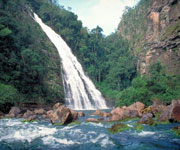
Noel Kempff Mercado National Park Bolivia

Image
The Kempff Mercado National Park is one of the largest (1,523,000 ha) and most intact parks in the Amazon Basin. With an altitudinal range of 200 m to about 1,000 m, it contains a rich mosaic of habitat types from cerrado savannah and forest to upland evergreen Amazonian forests. The park boasts an evolutionary history dating back over a billion years to the Precambrian. Located on the border with Brazil, the site includes a large section of the Huanchaca Plateau and surrounding lowlands. There are rugged cliffs in the northern, western and southern sides of the plateau, with several valleys and steep slopes in its eastern side. Several rivers have their sources on the plateau and form spectacular waterfalls. The largest river in the area is the Iténez, which marks the border with Brazil, to the north of the park, and the Paraguá River dominates the lowlands to the west. Continent: South America Country: Bolivia Category: Natural Criterion: (IX)(X) Date of Inscription: ...

Jesuit Missions of the Chiquitos Bolivia

Image
Jesuit Missions sent by the Spanish Crown to assure the conquest of the Indias del Cielo, the Jesuit fathers arrived at the Viceroyalty of Peru in 1567 to bring Christianity to the indigenous communities. The first collegial church was founded in 1577 at Potosí, on Bolivian territory; in 1592 a new house was established at Santa Cruz de la Sierra. The Jesuits seemed to have rationalized, in the Chiquito territory, the model of reducciones (settlements of Christianized Indians) which was largely inspired by the ideal city of the humanist philosophers. Between 1696 and 1760, six groups of reducciones were founded in a style that married Roman Catholic architecture with local traditions. Continent: South America Country: Bolivia Category: Cultural Criterion: (IV)(V) Date of Inscription: 1990

Historic City of Sucre Bolivia

Image
The rich heritage of the historic centre of the Spanish city of Sucre (also known as the city of four names - La Plata, Characas, Ciudad Blanca and Sucre) is an excellent, intact and well-preserved illustration of the architectural blending achieved in Latin America through the assimilation of local traditions and styles imported from Europe. The city of La Plata was founded by Pedro de Anzures, Marqués de Campo Rotondo, in 1538. Its foundation was a result of mining activities overseen by Gonzalo Pizarro, who was interested in exploring the highland eastern region of the Andean Cordillera. Continent: South America Country: Bolivia Category: Cultural Criterion: (IV) Date of Inscription: 1991

Spiritual and Political Centre of the Tiwanaku Culture

Image
The ruins of Tiwanaku bear striking witness to the power of the empire that played a leading role in the development of the Andean pre-Hispanic civilization. The buildings are exceptional examples of the ceremonial and public architecture and art of one of the most important manifestations of the civilizations of the region. Tiwanaku began as a small settlement, in what is known as its 'village period', around 1200 BCE. It was self-sufficient, with a non-irrigated form of farming based on frost-resistant crops, essential at this high altitude, producing tubers such as potatoes, oca and cereals, notably quinoa. In more sheltered locations near Lake Titicaca, maize and peaches were also cultivated. The inhabitants lived in rectangular adobe houses that were linked by paved streets. Continent: South America Country: Bolivia Category: Cultural Criterion: (III)(IV) Date of Inscription: 2000

Fuerte de Samaipata Bolivia

Image
Samaipata bears outstanding witness to the existence in this Andean region of a political culture with highly developed religious traditions, illustrated dramatically in the form of the dominant ceremonial feature of this site, its immense rock sculptures. The site is known to have been occupied and used as a ritual and residential centre by people belonging to the Mojocoyas culture as early as AD 300, and it was at this time that work began on the shaping of this great rock. It was occupied in the 14th century by the Inca, who made it a provincial capital. This is confirmed by the features that have been discovered by excavation - a large central plaza with monumental public buildings around it and terracing of the neighbouring hillsides for agriculture - which are characteristic of this type of Inca settlement. It formed a bulwark against the incursions of the warlike Chiriguanos of the Chaco region in the 1520s. Continent: Southe America Country: Bolivia Category: Cultur...